Buy pages24.eu ?
We are moving the project
pages24.eu .
Are you interested in purchasing the domain
pages24.eu ?
domain@kv-gmbh.de · 0541-91531010
Buy pages24.eu ?
How can one cut a bearing, if one has a two-way bearing without bearing force?
If one has a two-way bearing without bearing force, it can be cut by using a cutting tool such as a saw or a grinder. The cutting tool should be used to carefully cut through the outer ring of the bearing, being cautious not to damage the inner components. It is important to wear protective gear and work in a well-ventilated area when cutting a bearing to ensure safety. Additionally, it may be helpful to seek guidance from a professional or refer to the manufacturer's instructions for specific guidance on cutting the particular type of bearing. **
Is it a load-bearing or non-load-bearing wall?
Without further information or context, it is impossible to determine if the wall in question is load-bearing or non-load-bearing. Load-bearing walls are designed to support the weight of a structure, while non-load-bearing walls are primarily used for dividing spaces and do not support structural weight. It is important to consult a structural engineer or building professional to assess the specific characteristics of the wall in question to determine its load-bearing capacity. **


Similar search terms for Bearing
Top-Angebote
Products related to Bearing:
-
SIDEM 81085 Bearing, wheel bearing housingFitting Position: Rear; Height: 59; Inner Diameter [mm]: 14,2; Outer Diameter [mm]: 44; article number of the recommended special tool: R10081; Supplementary Article / Supplementary Info Info 2: Requires special tools for mounting; Braking/Driving Dynamics Article Reference: for ABS; Drive Type: Front-Wheel Drive, All-wheel Drive12,49 £*Shipping: 8,45 £Secure redirect to the provider
-
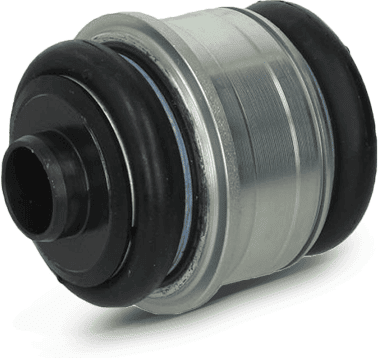
SIDEM 37082 Bearing, wheel bearing housingFitting Position: Rear; Height: 60; Inner Diameter [mm]: 14,2; Outer Diameter [mm]: 52; article number of the recommended special tool: R10064; Supplementary Article / Supplementary Info Info 2: Requires special tools for mounting18,99 £*Shipping: 8,45 £Secure redirect to the provider



-
How do you reinstall a hub bearing or ball bearing?
To reinstall a hub bearing or ball bearing, you will need to first clean the bearing housing and apply a thin layer of grease to the inside of the housing. Next, carefully place the bearing back into the housing, making sure it is properly aligned. Use a bearing press or a socket and hammer to gently tap the bearing into place until it is fully seated. Finally, reassemble the rest of the components in the correct order and torque the axle nut to the manufacturer's specifications. **
-
Live-bearing fish species
Live-bearing fish species are a type of fish that give birth to live young instead of laying eggs. This reproductive strategy is common among fish such as guppies, mollies, and swordtails. Live-bearing fish are popular among aquarium hobbyists due to their interesting breeding behaviors and the ability to observe the development of the young fish. This reproductive strategy allows the offspring to have a higher chance of survival compared to species that lay eggs, as the young are born fully developed and able to swim and feed on their own. **
-
What is a bearing?
A bearing is a mechanical component that allows for smooth rotation or movement between two parts. It is typically a round metal component that reduces friction and helps support the load of the rotating or moving parts. Bearings are commonly used in various machines and equipment, such as vehicles, industrial machinery, and household appliances, to facilitate smooth and efficient operation. **
-
What causes bearing damage?
Bearing damage can be caused by a variety of factors, including improper lubrication, contamination from dirt or debris, misalignment, overloading, or excessive heat. Lack of maintenance, poor installation practices, and using the wrong type of bearing for the application can also contribute to bearing damage. It is important to regularly inspect and maintain bearings to prevent damage and ensure optimal performance. **


'How do I recognize a load-bearing and a non-load-bearing wall?'
Load-bearing walls are typically located in the center of a building or perpendicular to the floor joists. They are usually made of thicker, stronger materials such as concrete, brick, or solid wood. Non-load-bearing walls, on the other hand, are often located on the perimeter of a building and are made of lighter materials such as drywall or wood studs. Additionally, load-bearing walls are essential for the structural integrity of a building, while non-load-bearing walls are primarily used for dividing space and can be removed without compromising the building's stability. If you are unsure, it is best to consult with a structural engineer or building professional to determine the load-bearing status of a wall. **
Should one use an industrial bearing or a cone bearing for a bicycle?
For a bicycle, it is generally recommended to use cone bearings. Cone bearings are more commonly used in bicycle hubs and bottom brackets because they are easier to adjust and maintain. They also provide a smoother and more efficient rotation for the wheels and pedals. Industrial bearings, on the other hand, are designed for heavier loads and higher speeds, which are not typically necessary for a bicycle application. Therefore, cone bearings are the more suitable choice for a bicycle. **
Top-Angebote
Products related to Bearing:
-
Stationery Office 2026 Driving Theory Test 3 Books Collection Set – Official DVSA Learning Collection2026 Driving Theory Test Collection 3 Books Set Pack: The Official DVSA Highway Code Book 2026 UK, Know Your Traffic Signs 2026 UK + The official DVSA theory test for car drivers The Official DVSA Theory Test for Car Drivers Prepare to pass your theory test first time, with the bestselling theory test book! Learn from the people who set the tests with the official Driver and Vehicle Standards Agency revision guide. Key features: Practical guidance – starting your driving journey can feel overwhelming. This guide walks you through everything from applying for your licence to choosing the right driving instructor - and much more. Practice questions – includes all official DVSA theory test revision questions across the 14 topics with over 740 questions to test your knowledge! Bite-size information – written in a clear, easy-to-remember format that connects theory to real-life driving, helping you truly understand what you’re learning. Interactive learning – packed with photos, diagrams, online videos, space to write notes, helpful hints and expert tips to boost your confidence and prepare you for your test. Know Your Traffic Signs This handy reference guide explains all the road signs that anyone using the road is likely to encounter. A must for any driver or rider. Vital reading for ADIs, trainers, learner drivers, and people who drive or ride for work Source material for all the theory tests – car, motorcycle, HGV, bus, and ADI Includes over 1,000 road signs, markings and road layouts Essential reading for anyone who uses the roads. The Official Highway Code The Official Highway Code has undergone one of its biggest overhauls, with new rules now in force. It remains essential reading for any road user. Many rules are a legal requirement and, if you disobey them, you're committing a criminal offence. Make sure you have the latest copy. More information: New rules on the hierarchy of road users - This means the introduction of new responsibilities towards more vulnerable road users, to keep them safe on the road. These will be known by the ‘H’ rules. Junctions - You should give way to pedestrians crossing or waiting to cross a road that you’re turning into. Parking Laws - New rules around parking on pavements. Source material - The Official Highway Code remains one of the source materials for all theory tests. Keep safe, make sure you're up to date with the latest rules of the road. Avoid penalties and fines by getting the latest copy of The Official Highway Code.27,89 £*Shipping: 2,99 £Secure redirect to the provider
-
Inspire Picks ClearMini Transparent Stationery Storage Box For Desk Organization sKeeping small essentials organized doesnt have to be complicated. This compact mini transparent storage box helps you sort and store everyday items while keeping everything clearly visible. Designed for offices, students, and home workspaces, this...42,56 $*Shipping: 0,00 $Secure redirect to the provider
-
SIDEM 81085 Bearing, wheel bearing housingFitting Position: Rear; Height: 59; Inner Diameter [mm]: 14,2; Outer Diameter [mm]: 44; article number of the recommended special tool: R10081; Supplementary Article / Supplementary Info Info 2: Requires special tools for mounting; Braking/Driving Dynamics Article Reference: for ABS; Drive Type: Front-Wheel Drive, All-wheel Drive12,49 £*Shipping: 8,45 £Secure redirect to the provider
-
How can one cut a bearing, if one has a two-way bearing without bearing force?
If one has a two-way bearing without bearing force, it can be cut by using a cutting tool such as a saw or a grinder. The cutting tool should be used to carefully cut through the outer ring of the bearing, being cautious not to damage the inner components. It is important to wear protective gear and work in a well-ventilated area when cutting a bearing to ensure safety. Additionally, it may be helpful to seek guidance from a professional or refer to the manufacturer's instructions for specific guidance on cutting the particular type of bearing. **
-
Is it a load-bearing or non-load-bearing wall?
Without further information or context, it is impossible to determine if the wall in question is load-bearing or non-load-bearing. Load-bearing walls are designed to support the weight of a structure, while non-load-bearing walls are primarily used for dividing spaces and do not support structural weight. It is important to consult a structural engineer or building professional to assess the specific characteristics of the wall in question to determine its load-bearing capacity. **
-
How do you reinstall a hub bearing or ball bearing?
To reinstall a hub bearing or ball bearing, you will need to first clean the bearing housing and apply a thin layer of grease to the inside of the housing. Next, carefully place the bearing back into the housing, making sure it is properly aligned. Use a bearing press or a socket and hammer to gently tap the bearing into place until it is fully seated. Finally, reassemble the rest of the components in the correct order and torque the axle nut to the manufacturer's specifications. **
-
Live-bearing fish species
Live-bearing fish species are a type of fish that give birth to live young instead of laying eggs. This reproductive strategy is common among fish such as guppies, mollies, and swordtails. Live-bearing fish are popular among aquarium hobbyists due to their interesting breeding behaviors and the ability to observe the development of the young fish. This reproductive strategy allows the offspring to have a higher chance of survival compared to species that lay eggs, as the young are born fully developed and able to swim and feed on their own. **
Similar search terms for Bearing
-
SIDEM 37082 Bearing, wheel bearing housingFitting Position: Rear; Height: 60; Inner Diameter [mm]: 14,2; Outer Diameter [mm]: 52; article number of the recommended special tool: R10064; Supplementary Article / Supplementary Info Info 2: Requires special tools for mounting18,99 £*Shipping: 8,45 £Secure redirect to the provider
-
SIDEM 821902 Bearing, wheel bearing housingFitting Position: Rear Axle both sides; Height: 67,3; Inner Diameter [mm]: 16,3; Outer Diameter [mm]: 52; article number of the recommended special tool: R10065; Observe service information: ; only in connection with: Circlip; Supplementary Article / Supplementary Info Info 2: Requires special tools for mounting13,99 £*Shipping: 8,45 £Secure redirect to the provider
-
SIDEM 21685 Bearing, wheel bearing housingFitting Position: outer, Rear Axle both sides, Lower; Height: 62; Inner Diameter [mm]: 14,1; Outer Diameter [mm]: 47,3; article number of the recommended special tool: R10082; Supplementary Article / Supplementary Info Info 2: Requires special tools for mounting11,49 £*Shipping: 8,45 £Secure redirect to the provider
-
What is a bearing?
A bearing is a mechanical component that allows for smooth rotation or movement between two parts. It is typically a round metal component that reduces friction and helps support the load of the rotating or moving parts. Bearings are commonly used in various machines and equipment, such as vehicles, industrial machinery, and household appliances, to facilitate smooth and efficient operation. **
-
What causes bearing damage?
Bearing damage can be caused by a variety of factors, including improper lubrication, contamination from dirt or debris, misalignment, overloading, or excessive heat. Lack of maintenance, poor installation practices, and using the wrong type of bearing for the application can also contribute to bearing damage. It is important to regularly inspect and maintain bearings to prevent damage and ensure optimal performance. **
-
'How do I recognize a load-bearing and a non-load-bearing wall?'
Load-bearing walls are typically located in the center of a building or perpendicular to the floor joists. They are usually made of thicker, stronger materials such as concrete, brick, or solid wood. Non-load-bearing walls, on the other hand, are often located on the perimeter of a building and are made of lighter materials such as drywall or wood studs. Additionally, load-bearing walls are essential for the structural integrity of a building, while non-load-bearing walls are primarily used for dividing space and can be removed without compromising the building's stability. If you are unsure, it is best to consult with a structural engineer or building professional to determine the load-bearing status of a wall. **
-
Should one use an industrial bearing or a cone bearing for a bicycle?
For a bicycle, it is generally recommended to use cone bearings. Cone bearings are more commonly used in bicycle hubs and bottom brackets because they are easier to adjust and maintain. They also provide a smoother and more efficient rotation for the wheels and pedals. Industrial bearings, on the other hand, are designed for heavier loads and higher speeds, which are not typically necessary for a bicycle application. Therefore, cone bearings are the more suitable choice for a bicycle. **
* All prices are inclusive of VAT and, if applicable, plus shipping costs. The offer information is based on the details provided by the respective shop and is updated through automated processes. Real-time updates do not occur, so deviations can occur in individual cases. ** Note: Parts of this content were created by AI.